



SMBs need AI advisors, and certified product training sets an advisory firm apart
There are a lot of reasons why the major foundation model companies have invested a lot of money into teams of forward deployed engineers (FDEs) to help enterprise customers scale their AI initiatives. Many of those same reasons are why technology advisors and MSPs should spend time on AI certification designed to help SMB customers move forward with their AI efforts.
In the unlikely event that you missed the headlines, AI companies including OpenAI, Anthropic, Cohere, Google, AWS and Microsoft all recently announced go-to-market and/or partner initiatives that include millions of dollars going toward FDEs. Palantir, for its part, is credited with inventing the concept of embedding FDEs into the integrations of its government and enterprise customers.
These AI-specialist engineers work closely with businesses and their technology leaders, as well as frontline staff, to integrate AI models into existing systems, reconsider critical workflows and solve security and governance issues, among other tasks. The ultimate idea is to help customers move from identifying AI opportunities to building systems that deliver measurable results.
That’s the stage where enterprise customers reside in their AI maturity. They’re no longer experimenting with AI or questioning where and whether it matters. Conversations are shifting from adoption of AI to execution, governance and measurable outcomes. The need for FDEs stems from the realization that most enterprises simply lack the expertise to execute the shift and realize AI’s true, and company-specific, potential.
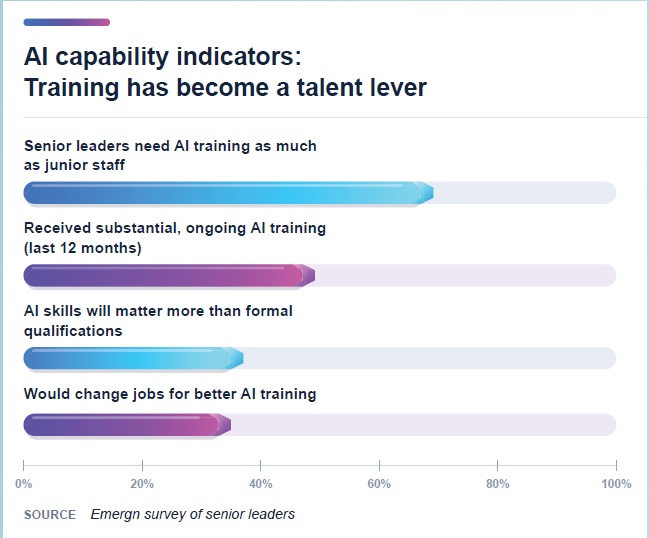
The SMB customers that reside in the channel’s wheelhouse may not be as far along on their AI journeys as their enterprise counterparts, but they certainly have moved past the experimentation stage to actively looking for measurable results. They don’t need to be sold on AI. Similar to enterprises, they are shifting from user adoption to business-wide adoption. And at that stage of the journey, SMBs need help deciding on the most effective places to invest in AI and finding ways to measure its effectiveness. In turn, technology advisors need to bring a deeper product-level understanding of the AI-enabled solutions they represent.
“Partners have a pivotal role to play in the AI and platforms landscape,” said Gartner senior principal Arunasree Cheparthi. “Those who position themselves as the economic control plane, deciding which AI capabilities to deploy, monitoring performance, ensuring policies and optimizing costs are set to capture the most long-term value.”
Unlike traditional SaaS solutions, which tend to provide a predefined purpose, AI models often are about a capability that customers must adapt to their own businesses. And since every deployment is different, companies need technically proficient advisors who can bridge engineering with customer needs.
That doesn’t mean technology advisors need to get deep into the weeds, as an FDE would, or attempt to come across as some type of machine learning engineer. Rather, conversations with customers should focus less on large-scale AI transformation and more on translating AI capabilities into business outcomes, such as productivity or employee efficiency, as well as governance and adoption strategy.
AI certification signals that an advisor has validated knowledge rather than just general familiarity, instilling confidence with SMB customers that they are recommending realistic solutions instead of trend-driven ones. Formal AI education helps advisors identify risks earlier and, with some understanding of the customer’s workflows, spot higher-value opportunities.
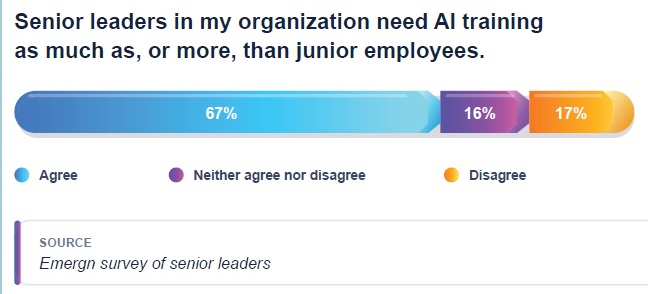
It’s also not uncommon for buying circles to include representatives from multiple departments within a business. In turn, certification classes often include information pertaining to security controls, compliance standards, governance, disaster recovery and ethical standards, arming advisors with answers to questions that could arise from multiple directions.
With all this in mind, AI marketplace Palomarr will be hosting a series of training and certification courses at the upcoming CVxEXPO26 this November in Phoenix, Ariz. The 1.5-hour product training sessions within the Palomarr AI Academy will be led by dedicated, expert instructors and conclude with online testing for certification.
Each of the breakout rooms of the Palomarr AI Academy at CVxEXPO will have a specific theme such as customer experience or cybersecurity. The product training sessions will cover AI readiness, deployment scenarios, use cases and conclude with a certification quiz. At the end of each session, attendees will receive a badge to show they have been certified in a specific AI category. Attendees also will be able to follow up with corresponding vendors in the expo hall for further information and instruction.
“It’s a classroom, but it will be a bit hands-on, as well. These are interactive sessions,” explained Aarde Cosseboom, founder of Palomarr. “You’re going to learn a lot in these sessions, so I wouldn’t anticipate people just sitting in the back of the room on their phones answering emails.”
The Palomarr AI Academy at CVxEXPO26 offers up to 16 individual training sessions for participants to choose from – available at no cost to all CVxEXPO26 registered attendees (a $595 dollar value).